The Pencil Is the Score: How La Mama Turns Homework Noise Into Heartbreak

Photo by Photo by Marc Pell on Unsplash on Unsplash
There is a moment in La Mama when the math stops being math and starts being a feeling. It does not arrive with strings. It arrives with a pencil tip snapping against a kitchen table at 11 p.m.
That tiny crack is the work of the film's sound team, who spent months collecting the noises of ordinary American homes and classrooms and then treating them with the same care most movies reserve for explosions. Their goal was simple and slightly insane: make abstract mathematics audible without ever making it sound like a lecture.
The Kitchen Table Is a Mixing Stage
Supervising sound editor Renee Alvarez calls the approach 'domestic forensic.' Her team recorded real families doing homework, real kettles clicking off, real chairs dragging across linoleum. They avoided slick library effects. If a fridge hummed, they wanted the exact wobble of that fridge.
'Math has a domestic soundtrack,' Alvarez says. 'It is a timer going off. It is a kid erasing so hard the paper pills up. It is a parent trying not to sigh. We built the whole movie around those sounds because that is where the anxiety lives.'
The team also made a rule that shaped every scene: no score until the audience has heard the room. In practice, that means La Mama often holds back music for the first thirty or forty seconds of a sequence, letting the audience settle into the sonic clutter of a lived-in space. By the time the orchestra does arrive, it feels like an emotional thought rather than a instruction.
Scene One: The 11 P.M. Fraction
Take the kitchen-table sequence, roughly two-thirds into the film. The daughter is stuck on fractions. The mother is tired. The clock on the wall is doing its slow, awful tick.
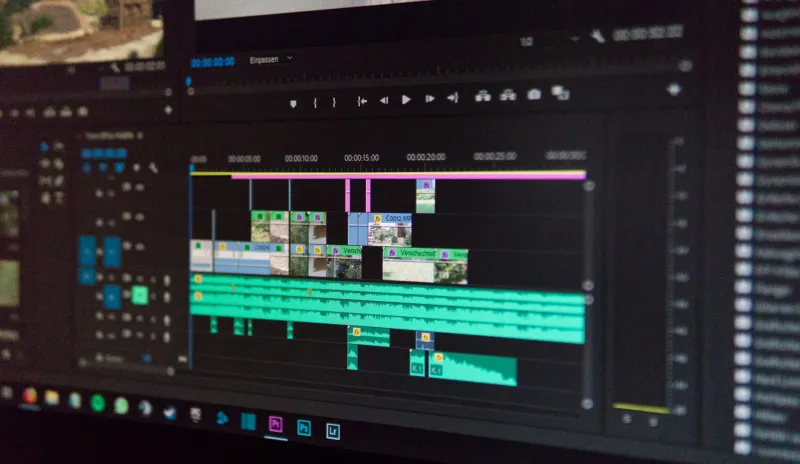
Frame by frame, the sound design tells the story before the dialogue does. At the top of the scene, the fridge hum sits low in the mix, a constant domestic drone. The mother's pencil scratches softly, then stops. We hear the daughter's eraser, then the paper shifting. At 00:00:42, the pencil tip breaks. The sound is dry and close, almost too loud. The mother exhales. The kettle clicks off in the next room. Only then does the score creep in, a single sustained cello note that feels like held breath.
'Alvarez and her team ran more than twenty versions of that pencil break,' says re-recording mixer Dan Okafor. 'Too sharp and it played like a jump scare. Too soft and it disappeared. We needed it to feel like a small failure that a mother has to absorb without making it a big deal.'
That is the trick of the scene. The pencil is not a metaphor for math. It is a metaphor for the thousand tiny interruptions of parenting, the ones nobody claps for. The sound team knew that if the snap landed correctly, the audience would feel the mother's patience thinning before she says a word.
Scene Two: The Classroom Panic
The second key sequence happens at school, when the daughter is called to the board. On paper, it is a standard classroom scene. In the mix, it becomes a panic attack viewed from the inside.
The team pulled the teacher's voice back until it sounds like it is coming through a wall. The fluorescent lights buzz at a frequency that sits just under the dialogue. Chalk squeaks once, then again, each scrape a little more isolated. A hallway door thumps somewhere off-screen. The daughter's breathing gets closer and drier. Then, just as she freezes, the sound drops out almost entirely, leaving only the soft click of a dry-erase marker cap being opened and closed in her hand.
'That cap click was an accident in the recording session,' Alvarez says. 'The actor was nervous and kept fidgeting with it. We kept it because it was the most honest sound in the room. It is the sound of someone trying to hold still.'
Okafor describes the classroom mix as 'a disappearing act.' The goal was not to make the room louder but to make the daughter's interior world louder by subtracting everything else. 'Audiences lean in when you take sound away,' he says. 'They think they are listening harder. Really, they are feeling harder.'
The Silence Pass
After the first test screening, the team did something unusual: they ran a full 'silence pass,' stripping music from several scenes to see what the raw rooms could carry. The pencil sequence survived untouched. The classroom sequence gained an extra beat of quiet before the daughter speaks.
That quiet is now one of the most commented-on moments in festival Q&As. People describe holding their breath without knowing why. They are not responding to a plot twist. They are responding to the sound of a room that feels exactly like the one they grew up in.
As La Mama continues its 2026 festival run, the sound team's work is a reminder that indie filmmaking often makes its biggest swings with the smallest tools. A pencil. A kettle. A fridge that will not stop humming. Mathematics may be abstract, but the sounds of learning it are not. They are as close as the kitchen table, and just as hard to forget.