The Fridge Door Is a Syllabus: Reading La Mama's Kitchen Like a Math Teacher
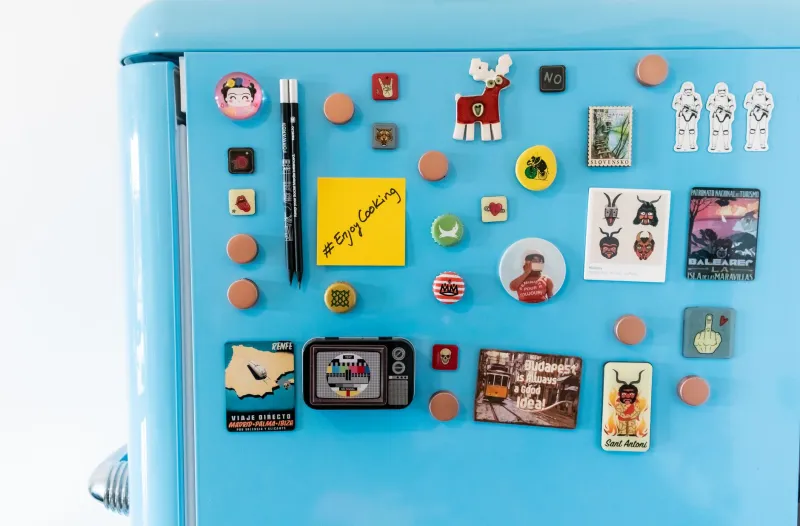
The first time you watch La Mama, you watch the faces. The second time, you watch the fridge.
That's not a joke about leftovers. The family kitchen in La Mama is one of the densest sets in the film, a room where the production team buried small, specific math details into the background—not as easter eggs for mathematicians, but as evidence of a household where numbers are both ordinary and loaded. Worksheets slide under magnets. Grocery lists live on the back of envelopes. A daughter's corrected homework stays up long after the grade has stopped mattering.
“We treated the fridge like a character with a diary,” says production designer Maya Ruiz. “It's the place where the family keeps its unfinished business. Some of that business is emotional. Some of it is long division.”
The Museum Behind the Milk
Ruiz and prop master Dennis Okafor built the La Mama kitchen as what Okafor calls “a lived-in math museum.” Nothing on the set was random. The cereal boxes were real, the sponge was used, and the paper stuck to the refrigerator door had been through a full prop-life: printed, folded, crumpled, flattened, and magneted back into place.
The key rule was that the math had to look like thinking, not decoration. The production team sourced worksheets from a real middle-school workbook and then had them filled out by hand—partially. One worksheet stops at problem four of ten. Another has the right answer but no work shown, with a teacher's red note in the margin: “Show your steps.” A third is covered in eraser smudges, the paper slightly shiny where someone kept changing their mind.
“We wanted evidence of thinking, not evidence of success,” Okafor says. “A perfect worksheet says nothing. A worksheet with a crossed-out mistake says, ‘This is a person.'”
That distinction matters for La Mama. The film isn't interested in math as a superpower. It's interested in math as a daily grind—the thing you do at the kitchen table while the pasta water boils and somebody asks you to check your work.
Grocery Lists and the Arithmetic of Dinner
Look past the characters in the opening kitchen scenes and you'll find a grocery list on the counter, written on the back of a utility envelope. It reads like a small word problem: “3 apples / 2 lbs rice / milk x2 / coffee.” Below that, a running total, then a second total with a coupon subtracted, then a third total circled and crossed out.
The props team made several versions of that list, each with a different level of arithmetic mess. The final one is deliberately imperfect. The coupon math is right, but the handwriting gets tighter near the bottom of the envelope.
“That's the math a lot of parents actually do,” Ruiz says. “You're not solving for x. You're solving for dinner. We wanted the audience to feel that math is already in the room before anyone opens a textbook.”
For math-anxious viewers, that choice is quietly radical. The grocery list doesn't announce itself as math. It just sits there, looking like adulthood.
Corrected Homework, Still Holding On
One of the most important props in the film is a single sheet of homework held to the fridge by a freebie magnet from a local pizza place. It's not a perfect paper. It has one problem circled, a teacher's check mark, and a note that reads, “Better. Keep showing your work.”
The production team auditioned several versions of that worksheet before landing on this one. Too good, and it felt fake. Too bad, and it felt like a plot point. The final version sits in the middle: a kid who is trying, a teacher who is paying attention, and a parent who hasn't taken it down.
“We talked a lot about what stays on the fridge and what gets thrown away,” Okafor says. “A corrected paper staying up is a small act of faith. It says, ‘This matters enough to keep looking at.'”
Magnets, Menus, and Family Time
The fridge door is also a timeline. There's a dentist's appointment card, a takeout menu, a school photo, a hardware-store calendar with a grid of tiny squares, and a calculator-shaped magnet with a dead battery written into the prop backstory. None of these are plot devices. They're texture.
But texture is the point. The production designer says the team wanted the kitchen to feel like it had been accumulating math for years—recipes with fractions, a measuring cup set that doesn't nest correctly, a ruler taped to the edge of a counter for no reason anyone remembers.
“We imagined the family had a drawer full of tape measures and none of them worked,” Ruiz says. “That's a real household. That's a household where math is not abstract. It's a thing you use to hang a picture and then lose.”
What to Look For on a Second Watch
La Mama doesn't wave its set dressing at you. That's why it rewards a rewatch—especially for film buffs who like to pause and for parents who have ever felt their pulse rise at the sight of a worksheet.
A few background details worth catching:
- The half-finished worksheet on the fridge is different from the one on the table in an earlier scene. The production team tracked which paper moved where, because homework migrates.
- The grocery list total is wrong on purpose. The mistake is small enough to miss and specific enough to feel real.
- The kitchen scale is always visible, but nobody uses it. It's just part of the room's quiet arithmetic.
- A pencil mark on the doorframe is not a height chart. It's a measurement someone started and abandoned.
- The calculator magnet on the fridge has a faded display. It's a joke for anyone who has ever grabbed a dead calculator to check a tip.
These details don't explain the movie. They don't need to. They do something subtler: they make the family's relationship to math feel lived-in rather than written. The kitchen becomes a place where numbers are neither villains nor heroes. They're just another thing on the counter, next to the mail.
“If you notice the grocery list before you notice the argument, we did our job,” Ruiz says. “The math should feel like weather. It's already there when you walk in.”
For La Mama, that's the quiet magic of the set. The film's biggest ideas about motherhood and mathematics aren't only in the script. They're on the fridge, under a magnet, waiting to be seen.