Splice and Solve: How La Mama's Editors Found the Movie's Pulse
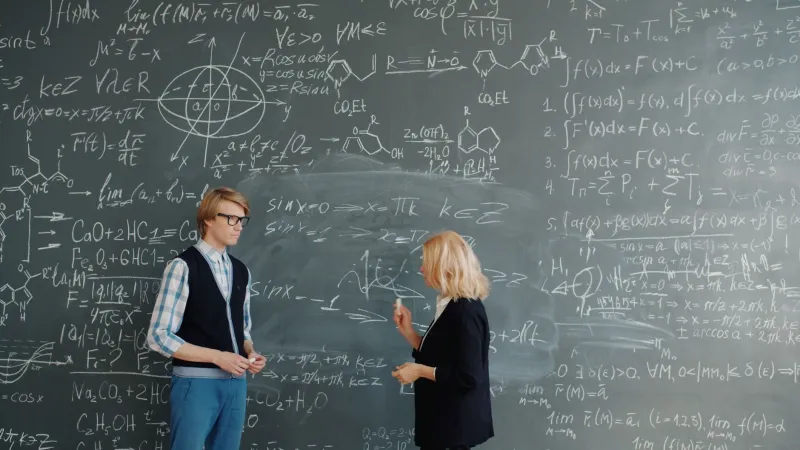
There is a moment in La Mama when the camera catches a cloud of chalk dust drifting through a shaft of classroom light. Nothing happens. Nobody speaks. The plot does not advance. And yet, according to the two editors who spent months inside the film's timeline, that is the shot that told them they had a movie.
“We must have watched that frame a hundred times,” says Rosa Delgado, who cut La Mama alongside Kenji Watanabe. “At first it was just a beautiful accident. Then we realized it was the whole film in miniature: something fragile, floating, impossible to hold. That's motherhood. That's math. That's the movie.”
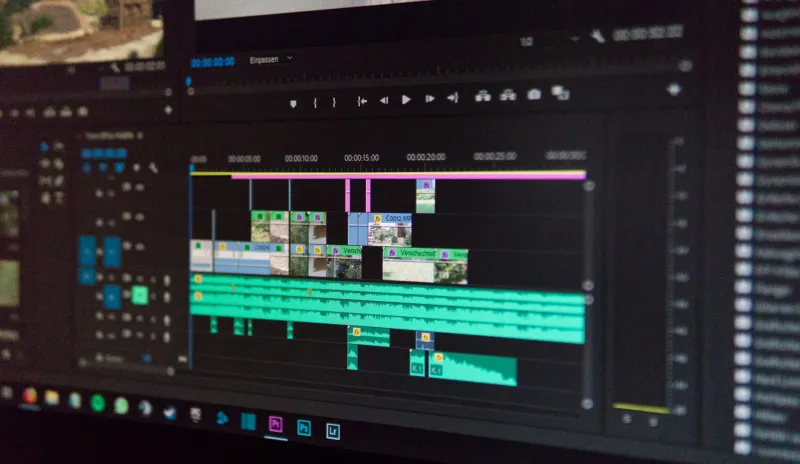
La Mama, The Movie sat down with Delgado and Watanabe for a wide-ranging conversation about the editing room — the place where a story about a mother, a daughter, and a chalkboard either becomes a film or becomes a pile of footage. What emerged was a portrait of two editors trying to solve a very specific problem: how do you cut a movie about two things that refuse to sit still?
The First Assembly Was a Math Problem
The first assembly of La Mama ran just over two hours and forty minutes. Delgado calls it “a very sincere hostage situation.” The film follows a mother navigating the daily grind of work, school pickup, and dinner while her daughter falls hard for mathematics. The screenplay kept the two threads close but separate. The edit had to braid them.
“The temptation was to make it a math movie with mom scenes, or a mom movie with math scenes,” Watanabe says. “We kept asking: where is the intersection? And the answer was not in dialogue. It was in rhythm. The mother's day is a series of small proofs. The daughter's math is a series of small leaps. They're doing the same thing in different languages.”
To find that shared language, the editors built what they call “the echo pass” — a version of the film where every classroom beat was paired with a domestic beat that rhymed with it. A scene of the daughter erasing a wrong answer was cut against the mother wiping down the kitchen counter. A shot of a teacher drawing a circle became a shot of the mother drawing a bath. Some of those pairings survived. Most did not. But the exercise gave the film its underlying pulse.
The Scene That Got Cut (and Why It Hurt)
Every edit has a casualty. For La Mama, it was a birthday-party scene that Delgado describes as “the funniest thing we shot and the saddest thing we lost.” The sequence involved the mother trying to explain a homework problem to a group of parents while a sheet cake melted in the background. It was warm, messy, and human. It also stopped the movie dead.
“It was a great scene in the wrong film,” Watanabe says. “We tried it in three different places. Every time, the audience laughed, and then they had to climb back into the story. We couldn't afford that climb.”
The editors also cut a flashback that explained too much. Early versions included a sequence showing the mother's own difficult experiences with math as a kid. It was designed to deepen her fear. Instead, it made the film feel like it was apologizing for her.
“We realized we didn't need the backstory,” Delgado says. “You can see it in the way she holds a pencil. You can see it in the way she says, 'I'm not the math person.' That's enough. Trust the audience. They've met this woman.”
Chalk Dust as a Character
The chalk-dust shot arrived late in the process. The footage had been captured as a pickup — a quick insert, almost an afterthought. In the first cut, it was used as a transition. In the second, it was cut entirely. In the third, Delgado dropped it into a quiet moment between the mother and daughter and something shifted.
“It became a breath,” she says. “The film needed a place where you could feel the weight of everything without being told what to feel. Chalk dust is just chalk dust. But in the right spot, it's also time, and effort, and all the stuff that disappears when you're done.”
Watanabe adds: “We started calling it 'the dust.' We'd say, 'Does this scene need the dust?' That was our shorthand for asking whether a moment had enough air. If it didn't, we knew we were pushing too hard.”
Rhythm, Not Formula
Both editors are quick to push back on the idea that La Mama has a “math structure.” There are no act breaks built around theorems, no clever equations in the edit. What the film has is a cadence: short scenes, quick cuts, then a long held shot that lets the audience catch up.
“We used a lot of J-cuts and L-cuts to keep the sound moving ahead of the picture,” Watanabe explains. “You hear the daughter's voice in the classroom before you see her. You hear the mother's sigh before you cut back to her. It creates a sense of two lives bleeding into each other. That's not math. That's just editing.”
Still, Delgado admits there was one sequence where they leaned into the math on purpose. A montage of the daughter working through a problem was originally scored with tense strings. The editors stripped the music out and replaced it with the sound of pencil on paper and a clock ticking. The result is one of the film's most quietly gripping passages.
“You can feel the audience lean in,” Delgado says. “They're not watching a math problem. They're watching someone try. That's the whole movie.”
What Editors Want Audiences to Notice
When asked what they hope filmgoers take away from La Mama, both editors point to the small stuff. The way a backpack lands on the floor. The way a mother's hand hovers over a chalkboard before she writes. The way the daughter looks at her mom when she finally gets the answer right — not with triumph, but with relief.
“The film is not about being good at math,” Watanabe says. “It's about being brave enough to try something you might fail at. That's the edit. That's what we were chasing.”
Delgado laughs. “And also, we hope people notice the chalk dust. We worked very hard on the chalk dust.”