The Chalkboard Ledger: How La Mama's Opening Credits Do the Math on Motherhood
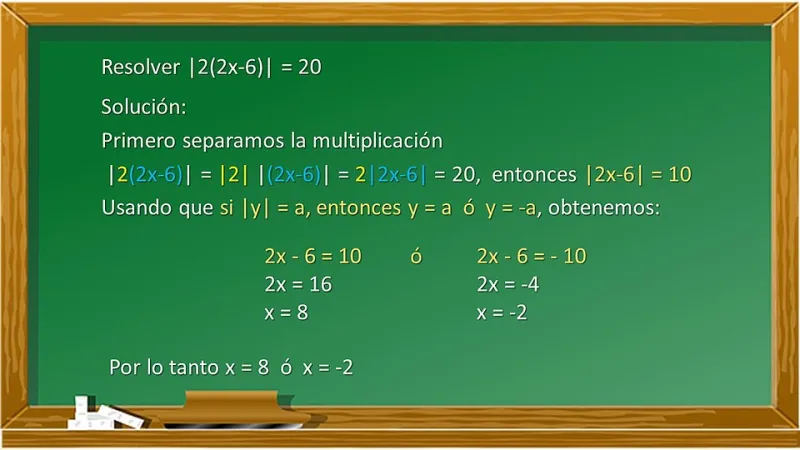
Photo: Manuelzapata04, CC BY-SA 4.0, via Wikimedia Commons
Most movies treat opening credits as a courtesy — a slow warm-up before the story starts. La Mama treats them as a claim. Before we meet the mother at the center of the film, before the first kitchen-table argument or the first late-night worksheet, the movie spends ninety seconds proving something: that the work of running a household is arithmetic performed in the dark.
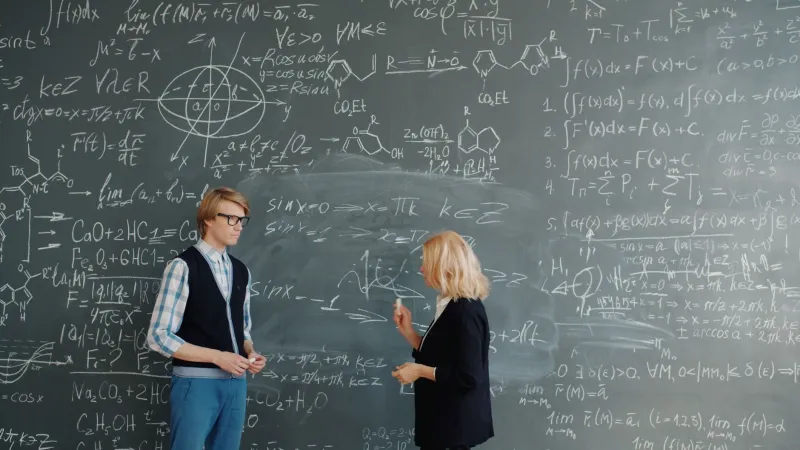
The sequence opens on a slate chalkboard. A hand — we never see whose — writes an equation in clean white chalk. The camera holds long enough that you start solving it. Then the chalk lifts, the equation smudges, and the same motion becomes a grocery list. Milk, eggs, birthday-card envelope, the kind of cheese the youngest will actually eat. The list dissolves into a school permission form. The form folds into a calendar grid, color-coded and overstuffed. By the time the title card lands, you have watched a mother's Monday compressed into a visual ledger.
A Ledger, Not a Montage
The film's director says she gave the title designer one instruction: "Do not make a motherhood montage." No slow-motion cereal pours, no soft-focus lunchbox packing. The director wanted a receipt.
"A montage says, 'Look at all the things she does,'" the director explains. "A ledger says, 'Look at what it costs.' Those are different arguments. We needed the second one."
Title designer Nora Whitfield built the sequence around that distinction. She shot practical elements on a kitchen table — real chalk, real paper, real pencil smudges — and composited them with minimal digital smoothing. The credits themselves appear as handwriting, each name written in the same blue ballpoint on different scraps of paper. The effect is less like a designed title card and more like something pulled from a junk drawer.
"Every object in that sequence had to feel used," Whitfield says. "The grocery list has a coffee ring. The permission slip has a bent corner. The calendar has a crossed-out dentist appointment. If it looked clean, it would look like a design choice. We wanted it to look like evidence."
The Grocery List Is a Variable
Whitfield's team built the grocery list from real lists submitted by crew members who are parents. Names were removed; quantities were kept. The list includes the usual domestic shorthand — "2%," "big box," "not the red kind" — but also margin notes that function like constraints: "if on sale," "sub if out." The camera treats these notes like variables in an optimization problem.
"A grocery list is a constraint satisfaction problem," Whitfield says, laughing a little. "You have a budget, a store layout, a picky eater, and a time window. That's not a metaphor. That's literally what a constraint satisfaction problem is."
The calendar grid is the sequence's densest frame. Blocks overlap. One square is labeled "pediatrician" and another "soccer pickup" with an arrow pointing to a third block labeled "swap?" The grid is not exaggerated for comedy. It looks like the calendars many parents actually keep — a schedule held together by contingency plans.
That detail matters because La Mama is not interested in portraying mothers as heroes or martyrs. It is interested in portraying them as people who compute. The title sequence makes that case visually before a single line of dialogue asks you to consider it.
Why It Had to Be Chalk
Whitfield tested the sequence with digital type first. It looked too tidy. She tried a paper-collage approach. It felt too crafty. Chalk won because chalk is temporary.
"Chalk is always about to be erased," she says. "You write the equation, you solve it, you wipe it away, you write the next one. That's the whole rhythm of the film. A mother solves the same problems every day and none of the solutions stay solved."
The sound design reinforces the point. There is no music in the first thirty seconds — just the scratch of chalk, the rustle of paper, the click of a pen. A phone alarm goes off near the end of the sequence and is silenced immediately. The silence is the joke and the thesis at the same time.
The director calls the sequence "the movie's thesis statement disguised as housekeeping." She says festival audiences in 2026 have responded to it in a way she did not expect. People lean forward. They laugh at the calendar. Then they go quiet when the equation reappears at the end, half-erased, rewritten in a different hand.
The Ninety-Second Proof
The sequence's final beat is easy to miss on a first viewing. After the title card, the camera returns to the chalkboard. The original equation is still there, but now it is surrounded by smaller marks — checkmarks, arrows, a grocery total, a time. The equation has not been solved. It has been annotated.
"That's the argument," Whitfield says. "The math isn't separate from the mothering. The math is the mothering. The credits are just the first proof."
La Mama opens with a to-do list because the film believes a to-do list is a kind of theorem. Not the kind you finish. The kind you keep working on. The title sequence does not tell us that. It shows its work.