The Room Votes Last: Inside La Mama’s Rough-Cut Night With Real Parents and Teachers
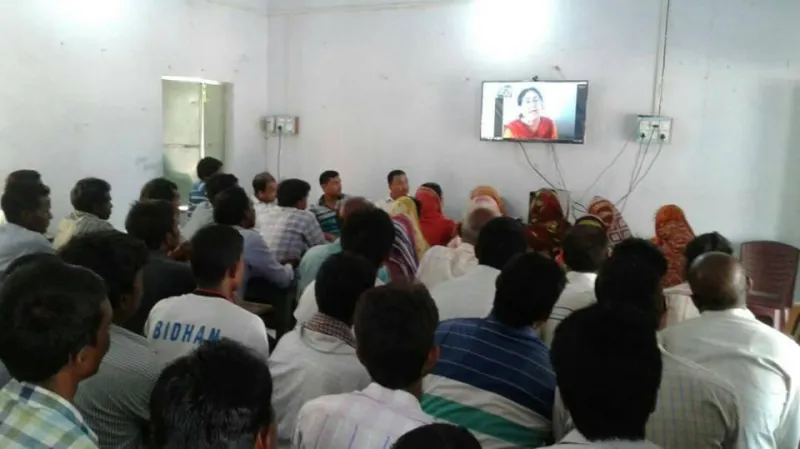
Photo: Devopam, CC BY-SA 4.0, via Wikimedia Commons
The first rule of a rough cut is that it is not a movie yet. It is a hypothesis. On a warm Tuesday in April 2026, we carried ours into a middle school cafeteria in Pasadena, California, propped a projector on a rolling cart, and invited a room of parents and teachers to tell us where the hypothesis failed.
There was no red carpet. There were foldout chairs, a coffee urn that gurgled through the second act, and a taped sign on the door: La Mama rough cut - please do not post spoilers. We handed out index cards and pencils. The movie had temp sound, two missing visual effects, and a title card that read SCENE 14 - FIX LATER. It was not ready for audiences. That was the point.
Why We Showed an Unfinished Movie to People With Bedtimes
Festival screenings are great for applause. They are terrible for honesty. By the time a film reaches a festival, the edit is locked, the sound is mixed, and the audience has been primed by a program note. We wanted the opposite: tired parents in work clothes, teachers with grading bags, and a room that would tell us the truth because nobody had told them to be polite.
Our director called it the PTA rough cut. Our editor called it the scariest screening of her career. Both were right. We were not chasing a score. We wanted to know where parents checked their phones, where teachers leaned forward, and where the movie started acting like it knew more about their lives than they did.
Note One: The Kitchen Argument Needed Air
The rough cut had a mother-daughter argument in the kitchen that moved like a whip. The daughter slams a worksheet down. The mother fires back. The daughter exits. The whole thing ran under forty seconds. In the edit bay, it felt sharp. In the cafeteria, it felt airless.
One parent wrote on her index card: I couldn’t breathe in there. Another said: That’s the knife - the line where the mom says, You’re not even trying. We had used that line because it sounded like something a frustrated parent might say. The room told us it sounded like something a frustrated parent might regret.
So we changed it. In the final cut, the mother says, I don’t know how to help you. Same frustration. Less blade. We also let the kettle finish whistling before the daughter answers. Twelve seconds of room tone, a rising steam cloud, and a silence that lets both characters decide whether to keep fighting. The scene is still hard. It is just no longer airtight.
Note Two: The Homework Scene Was Too Fast for Tired Eyes
Our homework montage was cut like a heist. Pencil scratches, clock ticks, a calculator app opening and closing, a worksheet filling with wrong answers. It was fun. It was also too fast for the people who actually do homework with kids at 9 p.m.
A fourth-grade teacher raised her hand during the feedback session and said, The parents I know are not moving that quickly by the third problem. They are staring at the page. They are wondering if they should Google it. They are deciding whether to be honest or helpful.
That note changed the rhythm. We held the camera on the pencil a beat longer. We added a failed eraser smudge. We let the mother’s phone buzz and go unanswered. The scene now has more dead air, which sounds like a downgrade until you remember that math anxiety often lives in the pauses. The montage no longer performs frustration. It sits inside it.
Note Three: The PTA President’s Quiet Note
One of the most useful notes came from the PTA president, who waited until most of the room had cleared and then handed us an index card with a single sentence: The daughter is not the only one doing math in this movie.
We had built the scene around the daughter’s worksheet. But the mother is doing math too: budgeting the week, calculating time, weighing whether to call the teacher, deciding how much truth to tell her own child about her own math history. We went back and adjusted a few reaction shots. We added a moment where the mother’s hand hovers over a calculator and then pulls away. We did not add a speech. We just let the camera notice that she is carrying a ledger nobody handed her.
What Changed in the Final Cut
The final edit is not a different movie. It is a more patient one. We trimmed roughly four minutes of explanatory material and added back about ninety seconds of breath. The argument is softer without being resolved. The homework scene is slower without being sentimental. The kitchen feels less like a set and more like a place where a family has already had this fight and will probably have it again.
We also cut a line that tested well in the abstract but played false in the room. The mother originally said, I was never good at this either. The parents liked the sentiment. The teachers did not. One said, That’s not what a kid needs in that moment. She needs to know it is not a life sentence. We replaced it with a smaller gesture: the mother puts the pencil down and sits beside her daughter instead of across from her. Nobody says anything. The room did.
The Lesson We Keep Relearning
A test screening is not a poll. It is a listening room. You do not count laughs or tears like votes. You watch for recognition, and you watch for the moment recognition turns into defense. When parents get quiet in a way that feels personal, you do not explain more. You get out of the way.
We locked the final edit in July 2026. The PTA rough cut will never be seen outside the people who sat in that cafeteria, and that is probably for the best. But its notes are all over the finished film. Every time the kettle whistles, every time the pencil hovers, every time the mother chooses a smaller gesture over a bigger speech, that room is still voting.