The Flinch Test: How La Mama Turned 'I Hate Math' Into Its Most Powerful Scene
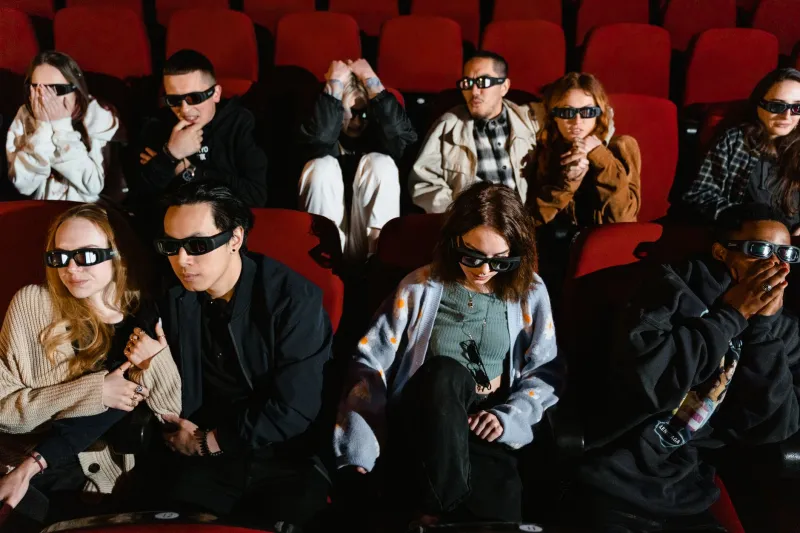
The first time La Mama played for an audience, director Maya Chen stood in the back of a rented screening room in Burbank and watched a woman in the third row physically recoil. Not at a jump scare. Not at a tearjerker moment. At a chalkboard.
"She saw the first equation come up and she just—flinched," Chen says. "Shoulders up, eyes down. Like the screen had thrown something at her." That flinch became the film's most important piece of feedback. And it kicked off an eighteen-month process of reshaping La Mama from a story about a mathematician mom into a story for the math-anxious.
The Feedback That Stung
La Mama follows a single mother and community college instructor who scribbles proofs on napkins while raising two kids. The premise invites big emotions. But in early 2024 test screenings, the filmmakers kept hearing the same confession from viewers: I hated math in school.
"It wasn't a complaint about the movie," says editor Jonah Reyes. "It was an apology. People were pre-apologizing for not understanding the math on screen. They'd say, 'I'm sure it's brilliant, I just checked out.'"
That pattern showed up in the data. Post-screening surveys from the first three test audiences—about 120 viewers total—revealed that 68 percent described themselves as "math anxious." Of those, nearly half said they disengaged whenever an equation appeared without context. The numbers weren't about comprehension. They were about shame.
"Math anxiety is real and physical," says Dr. Priya Nair, a math-education consultant who joined the project in mid-2024. "Your heart rate rises, your working memory narrows. You stop processing. It's not a knowledge gap—it's a threat response. And film can trigger it in three seconds flat."
Rewiring the Sound of Numbers
The first fix was sonic. In the original cut, equations landed with a low synth drone—something between a horror score and a TED Talk. Reyes calls it "the sound of being tested."
"We were accidentally scoring math like it was the villain," he says. "Viewers heard that drone and braced. We had to remove the threat before we could tell the story."
In the 2026 festival cut, the chalkboard scenes sound different. The drone is gone. Instead, you hear the scratch of chalk, the rustle of paper, a kid's sock feet on linoleum. When the lead writes a proof, the music doesn't swell—it recedes. Chen calls it "making room for the audience to breathe."
The edit changed too. The original opening equation montage ran ninety seconds with rapid cuts. Test audiences rated it the most stressful scene in the film—higher than the actual argument scene. Reyes cut it to forty seconds, added a beat where the main character erases a mistake and laughs, and let the camera linger on her face rather than the numbers.
The Before-and-After Cut
One scene in particular became the test case. In the 2024 assembly cut, the mom stays up late solving a problem while her daughter watches from the doorway. The original edit intercut close-ups of the equation with the mom's furrowed brow and a ticking clock. The message: math is a lonely, high-stakes battle.
Test audiences hated it. Not the scene—the feeling. "One woman wrote, 'This is exactly why I dropped out of calculus,'" Chen recalls. "She wasn't wrong."
The 2026 festival cut tells the same story in reverse. The mom still solves the problem, but the camera stays on the daughter's face—curious, not scared. The clock is silent. When the mom finishes, she doesn't triumph. She says, "I messed up twice. Wanna see?" The daughter climbs into her lap, and they erase together.
"That single change flipped the emotional math," Nair says. "Instead of modeling math as a threat, the film models it as a shared activity. That's exactly what the research says reduces anxiety—normalizing mistakes, not celebrating genius."
Marketing to the Math-Averse
The test screenings also reshaped how La Mama talks about itself. Early marketing leaned into the math—equations in the poster, a tagline about "solving the unsolvable." Focus groups came back nervous. "People thought it was homework," says producer Elena Vasquez.
The 2026 festival push takes a different tack. The new poster shows the mom and daughter at a kitchen table, a half-erased notebook between them, and the line: For everyone who ever said 'I'm not a math person.' The trailer opens with the daughter asking, "Mom, do you ever get it wrong?" and the mom answering, "Every day."
"We stopped selling the math," Vasquez says. "We started selling the permission to be bad at it."
That shift has already paid off. At a 2026 festival screening in Austin, the post-film Q&A was dominated by people confessing their own math histories—a retired teacher who cried during the eraser scene, a dad who said he finally understood why his daughter shut down during homework. No one asked about proofs. Everyone asked about the mom.
The Flinch Becomes the Point
Chen still thinks about the woman in the third row. She never found out her name, but she knows what that flinch meant. "She was waiting to be excluded," Chen says. "And we almost let her be."
Now the film has a different job. It's not a math movie for math people. It's a movie for the kid who stared at a worksheet and felt stupid, for the parent who dreads homework help, for anyone who's ever said I hate math and meant I hate feeling lost.
"The test screenings didn't make our movie dumber," Reyes says. "They made it kinder. And honestly? Kinder is a better equation."
The 2026 festival cut of La Mama is now screening on the festival circuit. Bring your math anxiety. The film has room for it.